Our work explores how regulatory, genomic and developmental changes generate evolutionary novelties across vertebrates and other metazoans.
RESEARCH
Genomes, development and the origin of animal diversity
RESEARCH LINE
Evolutionary origins of novelties in vertebrates and other metazoans
How are genuinely new structures built from inherited developmental programmes and genomic toolkits?
The origin of new biological structures
One of the most fascinating questions in evolutionary biology is how genuinely new structures arise. Most phenotypic evolution consists of gradual modifications of pre-existing traits, but occasionally innovations appear that have no clear homolog in their ancestors — and these novelties often open up entirely new evolutionary possibilities. How are such structures built from inherited developmental programmes and genomic toolkits? What kinds of genomic change — regulatory rewiring, co-option of pre-existing gene networks, emergence of new genes — enable their origin?
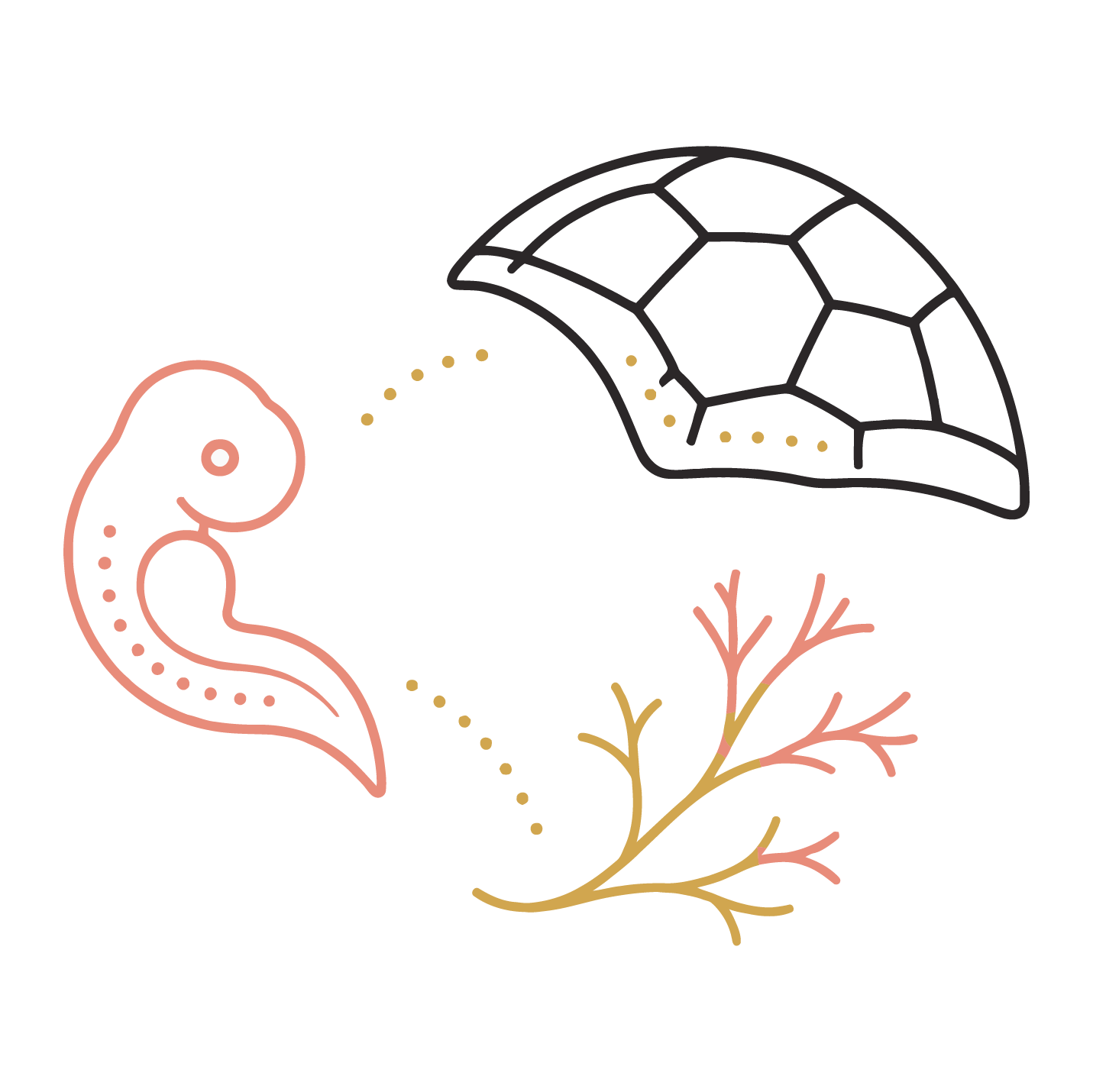
To address these questions, our lab combines comparative multi-omics (genomics, transcriptomics, epigenomics) with developmental biology tools to reconstruct the evolutionary history of key morphological innovations. We work with two complementary model systems: on the one hand, the turtle carapace, a structure entirely unique among vertebrates whose developmental basis remains poorly understood; and on the other, the endothelium — and its haemogenic capacity during embryonic development —, a key vertebrate novelty that offers a window into the invertebrate-to-vertebrate transition and the origin of haematopoiesis. We apply state-of-the-art single-cell and spatial transcriptomics to characterize the gene regulatory networks active during the development of these structures, and to identify the genomic changes that enabled their origin and diversification.
KEY QUESTIONS
How do novelties arise?
We ask how genomes change to produce something truly new, rather than only refining an existing trait.
Which networks are co-opted?
We study how pre-existing gene regulatory networks are reused, rewired or expanded during innovation.
What is ancestral?
We reconstruct ancestral states to infer the trajectory that led to present-day vertebrate novelties.
RESEARCH LINE
Genome evolution of early vertebrates
How did whole-genome duplications shape the origin and early diversification of vertebrates?
A natural experiment in evolutionary genomics
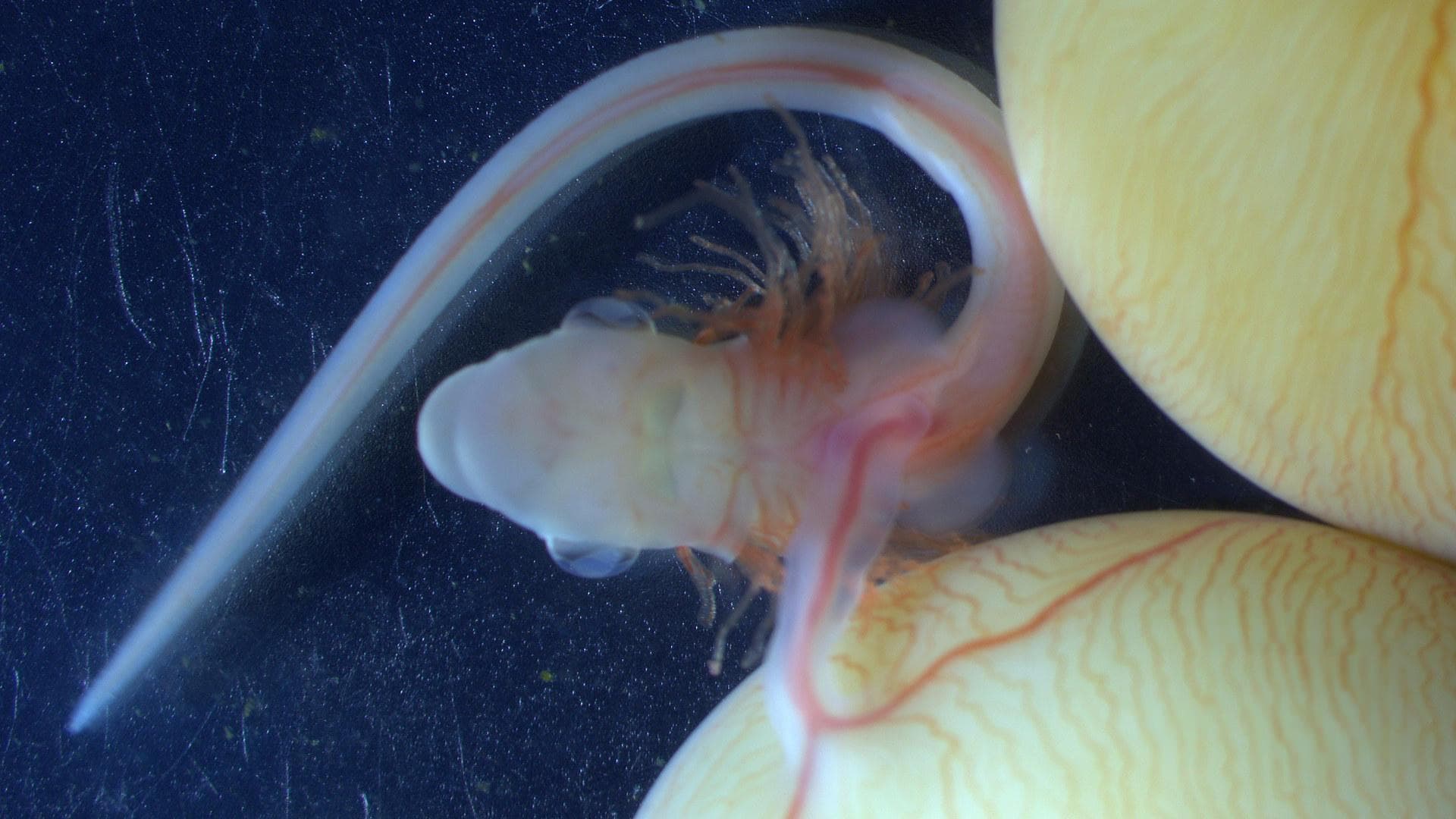
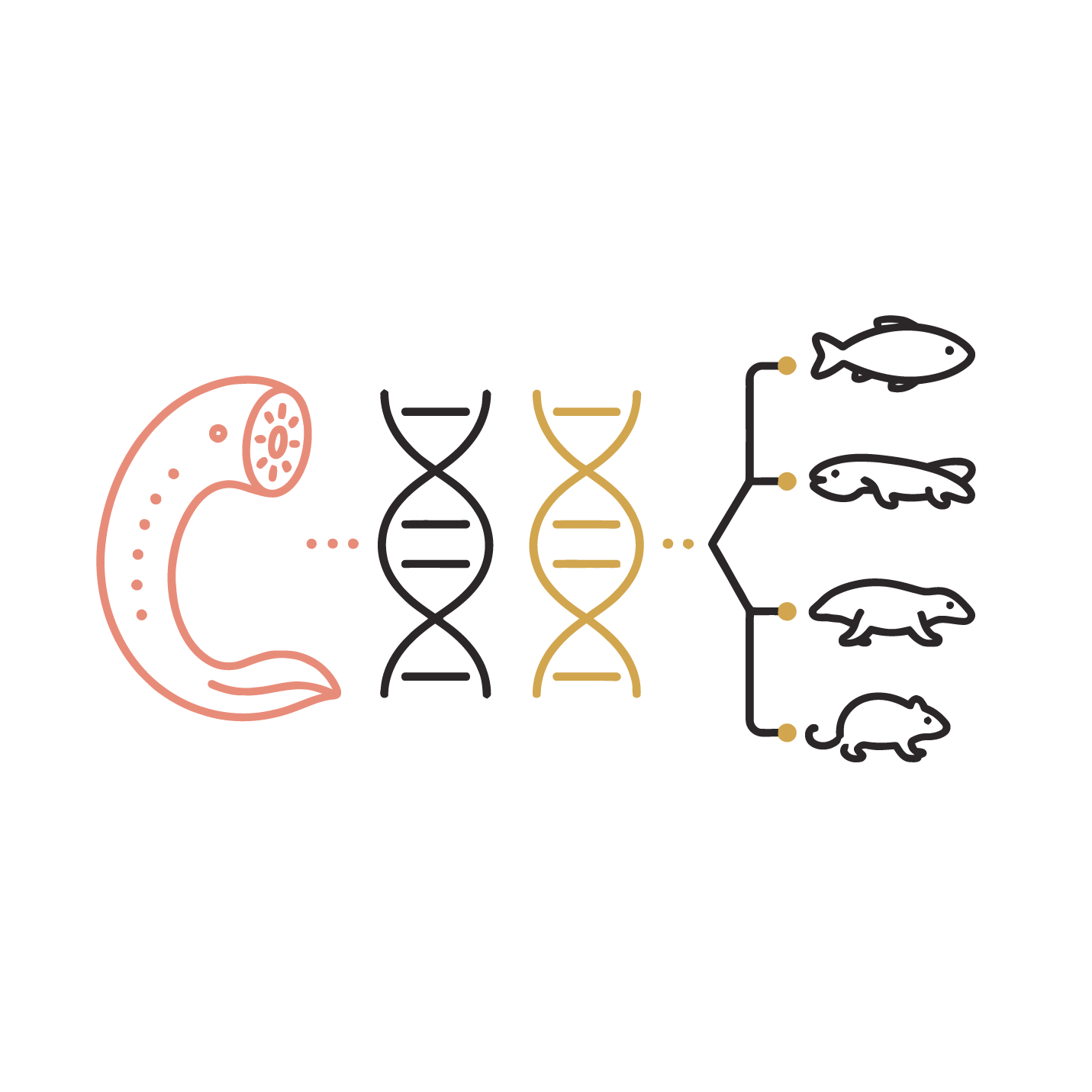
A central question in our lab is how whole-genome duplications (WGDs) have shaped the phenotypic evolution of vertebrates. WGDs are a recurrent feature of vertebrate genome history: gnathostomes (jawed vertebrates) and cyclostomes (jawless fishes) share an ancestral duplication (1R), while gnathostomes underwent a second round (2R) and cyclostomes experienced an independent triplication after their split from the former (CR). And yet, a striking puzzle remains: despite comparable levels of genome duplication, gnathostomes have diversified into the immense morphological variety we see today, while cyclostomes have not. Why?
To address this question, we are sequencing and analysing new cyclostome genomes, with a particular focus on unravelling the architecture and consequences of this group’s specific triplication. By comparing genomes, transcriptomes, and epigenomes, we investigate how duplicated genes are retained, lost, or acquire new functions; how regulatory landscapes expand or contract; and how these molecular changes translate — or do not — into morphological innovation. Our goal is to understand the mechanistic and historical link between genome architecture and phenotypic diversification, using cyclostomes as a unique natural experiment in evolutionary genomics.
KEY QUESTIONS
Why did similar genome duplications lead to such different evolutionary outcomes?
Genome duplication
We investigate the architecture and consequences of the cyclostome-specific genome triplication, comparing it with the duplication history of jawed vertebrates.
Gene retention and loss
We study how duplicated genes are retained, lost or acquire new functions, and how these changes affect the evolution of developmental programmes
Regulatory landscapes
We analyse how regulatory landscapes expand, contract or reorganize, and whether these molecular changes lead to phenotypic innovation.
FUNDING
Funding acknowledgements